

This Post Contains Affiliate Links. Please Read Our Disclosure for Full Information.
Want to get stronger without expensive gym equipment? Resistance bands are an affordable, versatile way to exercise at home. They can help you train your arms, legs, back, and core while gradually building strength.
These 15 resistance band exercises for beginners are simple, practical, and easy to include in your home workout routine.
1. Resistance Band Bicep Curls
Resistance band bicep curls are an excellent beginner exercise for strengthening your upper arms.
This movement primarily targets your biceps and can be performed with a long resistance band.
How to Do It:
- Stand with your feet hip-width apart.
- Place the middle of a long resistance band securely beneath both feet.
- Hold one end of the band in each hand with your palms facing forward.
- Keep your elbows close to your sides.
- Slowly bend your elbows and bring your hands toward your shoulders.
- Lower your hands with control.
Beginner Repetitions: 10–12 reps for 1–2 sets.
✨ Fitness Tip: Keep your upper arms still and avoid swinging your body to lift the band.
Shop resistance bands with handles.

2. Resistance Band Squats
Resistance band squats are a simple way to strengthen your lower body.
They primarily target your quadriceps and glutes while also engaging other muscles that support the movement.
A light loop band placed above your knees can provide additional resistance.
How to Do It:
- Place a loop resistance band just above your knees.
- Stand with your feet approximately shoulder-width apart.
- Keep your chest lifted and your feet planted.
- Bend your hips and knees as though sitting into a chair.
- Gently press your knees outward against the band.
- Return to standing.
Beginner Repetitions: 8–12 reps for 1–2 sets.
✨ Fitness Tip: Start with a shallow squat if needed, and keep your knees moving in line with your toes.
Shop fabric resistance bands for squats.

3. Seated Resistance Band Rows
Seated resistance band rows help strengthen the muscles of your upper and middle back.
They also engage your arms and can support better upper-body strength for everyday activities.
This is a useful exercise for beginners who prefer working out while seated.
How to Do It:
- Sit on the floor with your legs extended comfortably.
- Loop a long resistance band around the middle of your feet.
- Hold both ends securely.
- Sit tall with your shoulders relaxed.
- Pull your elbows backward while bringing your hands toward your waist.
- Slowly extend your arms to return to the starting position.
Beginner Repetitions: 10–12 reps for 1–2 sets.
✨ Fitness Tip: Avoid rounding your back or leaning backward to create momentum. Make sure the band is secure around your feet.
Shop long resistance bands for back exercises.

4. Resistance Band Lateral Walks
Resistance band lateral walks are great for activating the muscles around your hips and glutes.
They can also help improve lower-body control during everyday movements.
A small loop band works best for this beginner-friendly exercise.
How to Do It:
- Place a loop band just above your knees.
- Stand with your feet hip-width apart.
- Bend your knees slightly.
- Take a controlled step to the right.
- Follow with your left foot while maintaining tension in the band.
- Continue for several steps, then move in the opposite direction.
Beginner Repetitions: 8–10 steps in each direction.
✨ Fitness Tip: Keep your movements small and controlled instead of taking large steps that pull your knees inward.
Shop mini loop resistance bands.

5. Resistance Band Shoulder Press
The resistance band shoulder press strengthens your shoulders and triceps.
It can be performed at home with a long resistance band and requires very little space.
Beginners should start with light resistance and a comfortable range of motion.
How to Do It:
- Stand securely on the center of a long resistance band.
- Hold the ends at shoulder height.
- Keep your wrists straight and your core gently engaged.
- Press your hands upward without excessively arching your lower back.
- Stop at a comfortable height.
- Slowly lower your hands back to shoulder level.
Beginner Repetitions: 8–10 reps for 1–2 sets.
✨ Fitness Tip: If overhead pressing causes shoulder discomfort, skip this exercise and choose a more comfortable movement.
Shop light resistance exercise bands.
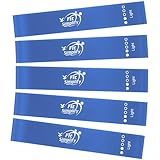
6. Resistance Band Glute Bridges
Resistance band glute bridges are a beginner-friendly exercise for strengthening your glutes.
They also engage the muscles that support your hips and lower body.
This movement can be performed on a yoga mat or another comfortable exercise surface.
How to Do It:
- Lie on your back with your knees bent.
- Place a loop resistance band above your knees.
- Keep your feet flat on the floor, approximately hip-width apart.
- Gently press your knees outward against the band.
- Lift your hips until your shoulders, hips, and knees form a comfortable line.
- Lower your hips slowly.
Beginner Repetitions: 10–12 reps for 1–2 sets.
✨ Fitness Tip: Focus on squeezing your glutes rather than pushing your lower back into an exaggerated arch.
Shop resistance bands for glute workouts.
7. Resistance Band Tricep Extensions
Resistance band tricep extensions target the muscles at the back of your upper arms.
They can help improve strength for pushing and lifting activities.
For beginners, a standing tricep kickback variation is a simple option that doesn’t require overhead movement.
How to Do It:
- Stand with one foot securely on the middle of a long resistance band.
- Hold one end of the band in the hand on the same side.
- Hinge slightly forward at your hips while keeping your back neutral.
- Bend your elbow and hold your upper arm close to your body.
- Straighten your elbow slowly against the resistance.
- Return to the starting position with control.
Beginner Repetitions: 10–12 reps per arm.
✨ Fitness Tip: Keep your upper arm steady and use a lighter band if you need to swing your shoulder to complete the movement.
Shop resistance tube bands for arms.
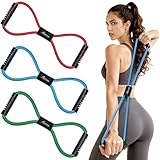
8. Resistance Band Standing Leg Abductions
Standing leg abductions strengthen the muscles along the outside of your hips.
These muscles contribute to hip stability and lower-body control.
Use a light loop band for this exercise.
How to Do It:
- Place a loop resistance band around your ankles.
- Stand upright beside a sturdy chair or countertop.
- Hold the support lightly for balance.
- Shift your weight onto one leg.
- Move the opposite leg slowly out to the side.
- Return with control and repeat on the other side.
Beginner Repetitions: 10 reps per leg.
✨ Fitness Tip: Keep your torso upright and avoid leaning sideways to lift your leg higher.
Shop light loop bands for leg exercises.
9. Resistance Band Chest Press
Resistance band chest presses help strengthen your chest, shoulders, and triceps.
They are a convenient alternative to some traditional pushing exercises.
A long resistance band can be wrapped around your upper back for this movement.
How to Do It:
- Stand with your feet hip-width apart.
- Position a long resistance band across your upper back, below shoulder level.
- Hold one end securely in each hand.
- Bring your hands near the sides of your chest.
- Press your hands forward until your arms are comfortably extended.
- Slowly return to the starting position.
Beginner Repetitions: 8–12 reps for 1–2 sets.
✨ Fitness Tip: Keep the band securely positioned and avoid locking your elbows forcefully at the end of the movement.
Shop long resistance bands for chest workouts.

10. Resistance Band Deadlifts
Resistance band deadlifts strengthen the glutes, hamstrings, and muscles that support your back.
They also help beginners practice the hip-hinge movement used in many everyday activities.
Start with a light band and focus on maintaining good posture.
How to Do It:
- Stand on the middle of a long resistance band with your feet hip-width apart.
- Hold the ends securely with your arms extended.
- Keep your knees slightly bent.
- Push your hips backward while keeping your back neutral.
- Lower your hands toward your knees or shins as comfortably as possible.
- Press through your feet and return to standing.
Beginner Repetitions: 8–12 reps for 1–2 sets.
✨ Fitness Tip: Move from your hips rather than rounding your back. You don’t need to lower the band all the way to the floor.
Shop resistance bands for deadlifts.
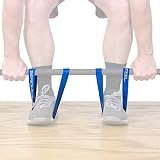
11. Resistance Band Pull-Aparts
Resistance band pull-aparts are a simple upper-body exercise that primarily works your upper back and rear shoulders.
They can be especially useful for adding pulling movements to your home workout routine.
Use a light, long resistance band.
How to Do It:
- Stand upright with your feet hip-width apart.
- Hold the band in front of your chest with both hands.
- Keep your arms approximately straight with a slight bend in your elbows.
- Slowly pull your hands apart.
- Stop when you reach a comfortable range of motion.
- Return to the starting position with control.
Beginner Repetitions: 10–12 reps for 1–2 sets.
✨ Fitness Tip: Keep your shoulders relaxed and avoid shrugging toward your ears.
Shop flat resistance bands for upper body.

12. Resistance Band Clamshells
Resistance band clamshells target the muscles around your outer hips.
They are performed while lying on your side, making them a comfortable option for many beginners.
A small loop resistance band works well.
How to Do It:
- Lie on your side with your knees bent.
- Place a loop resistance band just above your knees.
- Keep your feet together.
- Slowly lift your top knee while keeping your pelvis steady.
- Lower your knee with control.
- Repeat before switching sides.
Beginner Repetitions: 10–12 reps per side.
✨ Fitness Tip: Avoid rolling your hips backward. A smaller movement with good control is more useful than forcing your knee higher.
Shop mini resistance bands for hip exercises.
13. Resistance Band Standing Hamstring Curls
Standing hamstring curls strengthen the muscles at the back of your thighs.
They are a simple addition to a beginner lower-body workout.
Use a light loop band and a sturdy support for balance.
How to Do It:
- Secure a light loop band around your ankles.
- Stand beside a sturdy chair or countertop.
- Keep one foot planted on the floor.
- Slowly bend the opposite knee, bringing your heel toward your glutes.
- Keep your thighs relatively still.
- Lower your foot with control and switch legs.
Beginner Repetitions: 10 reps per leg.
✨ Fitness Tip: Start without a band if you find it difficult to maintain your balance.
Shop resistance loop bands for legs.
14. Resistance Band Seated Leg Extensions
Seated leg extensions target the quadriceps at the front of your thighs.
This beginner-friendly movement can be performed while sitting on a sturdy chair.
Use a light resistance band that can be attached securely.
How to Do It:
- Sit upright on a stable chair with your feet on the floor.
- Secure one end of a resistance band to a suitable low anchor behind the working leg.
- Loop the other end around your ankle using an appropriate ankle attachment.
- Slowly straighten your knee against the resistance.
- Pause briefly without forcing the knee into a locked position.
- Return to the starting position and repeat on the other leg.
Beginner Repetitions: 10–12 reps per leg.
✨ Fitness Tip: Use only a secure, manufacturer-approved anchor and ankle attachment. If you don’t have one, perform the movement without resistance.
Shop resistance bands with ankle straps.

15. Resistance Band Pallof Press
The Pallof press is a core-strengthening exercise that challenges your body to resist rotation.
It works your abdominal and trunk muscles while encouraging controlled posture.
Beginners can perform it using a light resistance band attached to a secure anchor.
How to Do It:
- Attach a long resistance band to a sturdy anchor at approximately chest height.
- Stand sideways to the anchor with your feet shoulder-width apart.
- Hold the band with both hands near your chest.
- Gently engage your core.
- Slowly press your hands straight forward without allowing your torso to rotate.
- Bring your hands back toward your chest and repeat on the opposite side.
Beginner Repetitions: 8–10 reps per side.
✨ Fitness Tip: Start close to the anchor with light tension and use a smaller range of motion if necessary.
Shop resistance bands with door anchors.
Best Resistance Band Exercises for Different Muscle Groups
Resistance bands can help you create a balanced home workout without needing a large collection of equipment.
| Muscle Group | Recommended Exercises | Main Focus |
|---|---|---|
| Biceps | Resistance Band Bicep Curls | Upper-arm strength |
| Triceps | Tricep Extensions, Chest Press | Pushing strength |
| Shoulders | Shoulder Press, Pull-Aparts | Shoulder strength |
| Chest | Resistance Band Chest Press | Upper-body pushing |
| Upper Back | Seated Rows, Pull-Aparts | Pulling strength |
| Glutes | Glute Bridges, Squats, Clamshells | Hip and glute strength |
| Quadriceps | Squats, Seated Leg Extensions | Front thigh strength |
| Hamstrings | Deadlifts, Standing Hamstring Curls | Back thigh strength |
| Outer Hips | Lateral Walks, Leg Abductions | Hip stability |
| Core | Pallof Press | Trunk stability |
Beginner Resistance Band Workout Plan at Home
You don’t need to complete all 15 exercises in one workout.
Start with a short, balanced routine and gradually increase the amount of exercise as you become more comfortable.
20-Minute Beginner Full-Body Resistance Band Workout
| Exercise | Repetitions | Sets |
|---|---|---|
| Resistance Band Squats | 10 | 2 |
| Seated Resistance Band Rows | 10 | 2 |
| Resistance Band Chest Press | 10 | 2 |
| Resistance Band Glute Bridges | 12 | 2 |
| Resistance Band Bicep Curls | 10 | 2 |
| Resistance Band Pallof Press | 8 per side | 1 |
Suggested Routine:
- Warm up with 3–5 minutes of gentle movement.
- Complete each exercise slowly and with control.
- Rest for approximately 30–60 seconds between sets, or longer when needed.
- Finish with a few minutes of easy movement and relaxed stretching.
The workout may take around 20 minutes, depending on your pace and rest periods.
For many beginners, two nonconsecutive strength-training days per week is a reasonable starting point.
How to Choose the Right Resistance Band for Beginners
Resistance bands come in different styles and resistance levels.
Choosing the right type can make your workouts more comfortable and effective.
| Resistance Band Type | Best For | Beginner Benefits |
|---|---|---|
| Mini Loop Bands | Glute bridges, lateral walks, clamshells | Compact and easy to use |
| Long Flat Bands | Pull-aparts, rows, upper-body exercises | Versatile and lightweight |
| Tube Bands With Handles | Bicep curls, chest presses, shoulder presses | Comfortable grip |
| Fabric Loop Bands | Squats and hip exercises | Often stay in place well |
| Bands With Door Anchors | Pallof presses and anchored exercises | Expands exercise options |
| Light Resistance Bands | Learning new movements | Easier to control |
What Resistance Level Should Beginners Use?
Start with a light resistance band that allows you to complete each repetition with good technique.
The final few repetitions may feel challenging, but you should still be able to control the movement.
Resistance labels such as light, medium, and heavy are not standardized across manufacturers.
Choose resistance based on your ability rather than the color or label alone.
Benefits of Resistance Band Workouts at Home
Resistance bands are popular because they offer several practical advantages.
1. Affordable Equipment
Resistance bands generally cost less than many traditional strength-training machines.
2. Convenient for Small Spaces
You can store most resistance bands in a drawer or small bag.
3. Suitable for Different Fitness Levels
Bands are available in different resistance levels, allowing you to adjust the difficulty.
4. Versatile Exercise Options
You can train your upper body, lower body, and core using a small collection of bands.
5. Portable for Travel
Resistance bands are lightweight and easy to pack.
6. Helpful for Building Strength
When used with appropriate resistance and progressive training, resistance bands can support improvements in muscular strength.
7. Easy to Combine With Other Workouts
Resistance band exercises can complement walking, mobility routines, and other physical activities.
How to Make Resistance Band Exercises More Effective
Good technique and consistent practice matter more than using the strongest band available.
Start with light resistance: Learn each movement before increasing difficulty.
Move slowly: Control both the lifting and returning phases.
Maintain good posture: Avoid unnecessary twisting, arching, or swinging.
Use a comfortable range of motion: Don’t force joints into painful positions.
Increase resistance gradually: Move to a stronger band when your current exercises become consistently easy.
Rest between workouts: Give your muscles time to recover.
Track your progress: Record the exercises, sets, repetitions, and band resistance you use.
Stay consistent: A manageable routine performed regularly is more useful than an overly ambitious workout you can’t maintain.
Resistance Band Safety Tips for Beginners
Resistance bands are convenient, but they can snap or slip if used incorrectly.
Follow these basic precautions:
- Inspect bands for tears, cracks, or excessive wear before each workout.
- Replace damaged or weakened bands.
- Use resistance bands according to manufacturer instructions.
- Avoid stretching bands beyond their recommended limits.
- Keep bands away from sharp edges.
- Use secure anchors designed for resistance band training.
- Never attach bands to unstable furniture.
- Keep your face out of the band’s potential recoil path.
- Wear appropriate footwear when standing on bands.
- Stop if you experience sharp pain, dizziness, or unusual discomfort.
- Begin with light resistance and progress gradually.
If you have an injury, significant joint pain, or a medical condition that affects exercise safety, consult an appropriate healthcare professional before beginning a new routine.
Common Resistance Band Workout Mistakes to Avoid
Beginners can improve their workouts by avoiding a few common mistakes.
Using too much resistance: A band that’s too strong can make it difficult to maintain proper technique.
Rushing through repetitions: Fast, uncontrolled movements reduce your ability to manage the exercise.
Holding your breath: Breathe naturally throughout each movement.
Using poor posture: Keep your body aligned and avoid unnecessary strain.
Skipping warm-ups: Prepare your muscles and joints with gentle movement.
Ignoring band damage: Inspect your equipment before every session.
Training the same muscles every day: Allow adequate recovery between challenging strength sessions.
Expecting immediate results: Building strength takes consistent practice over time.
Doing too many exercises at once: Begin with a manageable routine and gradually add variety.
Frequently Asked Questions
Are resistance bands good for beginners?
Yes. Resistance bands can be a practical option for beginners because they are affordable, portable, and available in different resistance levels.
Can you build muscle with resistance bands?
Yes. Resistance band training can help build muscle and strength when the exercises provide sufficient challenge and become progressively more demanding over time.
How many resistance band exercises should beginners do?
A beginner can start with approximately five or six exercises covering different muscle groups. The number can increase as fitness and confidence improve.
How often should beginners use resistance bands?
Many beginners can start with strength workouts on two nonconsecutive days per week. Frequency should be adjusted according to fitness level, recovery, and individual needs.
What resistance band strength is best for beginners?
Light resistance is often a good starting point. Choose a band that allows controlled repetitions with proper technique.
Can I do resistance band workouts every day?
Light movement may be suitable daily, but challenging strength workouts for the same muscles generally benefit from recovery time between sessions.
Final Thoughts
Resistance bands make it easier to start strength training at home without investing in bulky gym equipment.
These 15 resistance band exercises for beginners offer a practical way to strengthen your arms, legs, glutes, back, and core while developing better exercise habits.
Whether you’re starting with simple bicep curls, glute bridges, or a full-body workout, focus on controlled movements, appropriate resistance, and consistency.
Start with a few exercises, build confidence with proper technique, and gradually increase the challenge as your strength improves.
Which resistance band exercise will you try first? Save this beginner-friendly home workout guide for your next fitness session! 💪
Discover more from Serenity Talks
Subscribe to get the latest posts sent to your email.


