

This Post Contains Affiliate Links. Please Read Our Disclosure for Full Information.
A vision board is more than a collection of inspiring pictures. The way you arrange your goals can make them easier to understand, prioritize, and turn into meaningful action.
Whether you prefer a minimalist design or a colorful collage, these 25 vision board layout ideas for organizing your goals will help you create a beautiful, motivating board that reflects your dreams and priorities.
1. Create a Classic Grid Vision Board Layout
A grid layout is one of the easiest ways to organize multiple goals without making your vision board look cluttered.
Divide your board into equal squares or rectangles using a ruler and pencil.
Assign each section to a different goal, such as career, fitness, finances, relationships, or personal growth.
Add inspirational pictures, short affirmations, and specific milestones inside each section.
The structured design makes it easy to see all your priorities at a glance.
✨ Vision Board Tip: Leave a little space between sections so your board feels organized rather than overcrowded.
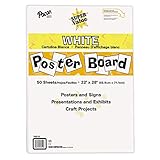
Shop vision board poster supplies.
2. Design a Vision Board With a Central Goal
A central goal layout is perfect when you have one major priority that influences several smaller goals.
Place your main goal in the center of the board using a large image, phrase, or written statement.
Arrange supporting goals around it in a circular pattern.
For example, if your main goal is improving your health, surrounding sections might include exercise, nutrition, sleep, and stress management.
This layout helps you understand how smaller habits contribute to a bigger objective.
✨ Vision Board Tip: Make the central goal visually larger than the supporting goals to establish a clear focal point.
Shop large cork bulletin boards.

3. Organize Your Vision Board Into Life Categories
A category-based vision board helps you balance different areas of your life.
Divide your board into sections for career, health, finances, relationships, hobbies, and personal development.
Choose a different color or heading for each category.
Add images and words that represent your goals within those areas.
This layout is especially useful if you have several priorities and want to keep them clearly separated.
✨ Vision Board Tip: Choose only the categories that matter to you instead of filling every possible section.
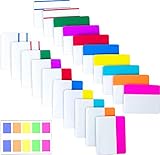
Shop colorful sticky notes and labels.
4. Create a Minimalist Vision Board Layout
A minimalist vision board focuses on a few meaningful goals rather than dozens of images.
Choose a neutral background such as white, beige, or cream.
Select three to five important goals and represent each with one picture and a short statement.
Arrange the elements with generous spacing.
The result is a clean, calming board that keeps your attention on what matters most.
✨ Vision Board Tip: Use one consistent font style and a limited color palette to maintain a simple aesthetic.
Shop minimalist vision board kits.

5. Make a Quarterly Vision Board Layout
A quarterly vision board divides your goals into four manageable periods.
Create four sections labeled January–March, April–June, July–September, and October–December.
Add a few realistic priorities to each quarter.
For example, your first quarter might focus on building routines, while the second emphasizes learning new skills.
This arrangement helps you see how your goals can develop throughout the year.
✨ Vision Board Tip: Review your quarterly goals every three months and adjust them based on your progress.
Shop quarterly planning stickers.
6. Design a Monthly Goal Vision Board
A monthly vision board is ideal for people who enjoy short-term planning.
Divide your board into twelve sections, one for each month.
Add one main goal, habit, or milestone to every section.
You can use small photographs, motivational phrases, or colorful labels to represent each month.
This layout makes a large annual plan feel more manageable.
✨ Vision Board Tip: Keep monthly goals flexible so unexpected changes don’t make your board feel discouraging.
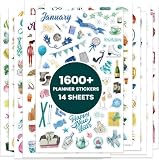
Shop monthly planner stickers.

7. Create a Timeline Vision Board Layout
A timeline layout helps you organize goals in the order you want to achieve them.
Draw a horizontal or vertical line across your board.
Mark important dates or milestones along the timeline.
Add pictures, notes, and small action steps beside each milestone.
This layout works well for career transitions, education plans, savings goals, or personal projects.
✨ Vision Board Tip: Include realistic checkpoints rather than focusing only on the final outcome.
Shop timeline planner stickers.

8. Make a Vision Board With a Priority Pyramid
A priority pyramid layout helps you distinguish essential goals from optional ones.
Draw a large triangle and divide it into three horizontal sections.
Place your most important priority at the top.
Use the middle section for supporting goals and the bottom section for smaller tasks or habits.
This visual hierarchy can help you avoid spreading your energy across too many objectives.
✨ Vision Board Tip: Limit the top section to one or two major priorities so your focus remains clear.
Shop colorful craft poster boards.

9. Create a Mind Map Vision Board Layout
A mind map vision board is perfect for creative thinkers who enjoy connecting ideas.
Write your main theme in the center of the board.
Draw branches leading to different goals or life categories.
Add smaller branches for habits, milestones, and resources that support each goal.
Use different colors to distinguish the branches.
This arrangement helps you explore how your goals relate to one another.
✨ Vision Board Tip: Use short phrases instead of long paragraphs to keep your mind map easy to read.
Shop colorful fine-tip markers.

10. Design a Vision Board With a Photo Collage Layout
A photo collage layout is ideal if you love visual inspiration.
Collect pictures that represent your goals, dreams, and desired lifestyle.
Arrange them in overlapping layers across your board.
Use larger images for major priorities and smaller ones for supporting ideas.
Add a few meaningful words or affirmations to complete the design.
✨ Vision Board Tip: Choose images that represent specific goals rather than selecting pictures only because they look attractive.
Shop scrapbook collage supplies.

11. Create a Color-Coded Vision Board
Color coding can make a busy vision board easier to navigate.
Assign a different color to each goal category.
For example, use green for wellness, blue for career, pink for relationships, and yellow for personal growth.
Match your images, labels, and decorative elements to the assigned colors.
This creates a clear visual system without requiring strict borders between sections.
✨ Vision Board Tip: Create a small color key in one corner so you can quickly identify each category.
Shop color-coded planner supplies.

12. Make a Digital Phone Wallpaper Vision Board
A phone wallpaper vision board keeps your goals visible throughout the day.
Create a vertical layout using a digital design tool.
Arrange three to six important images with short motivational phrases.
Leave enough empty space near the top for the phone’s clock and notifications.
Save the finished design as your lock screen or home screen wallpaper.
✨ Vision Board Tip: Use high-contrast text and avoid placing important words behind app icons or widgets.
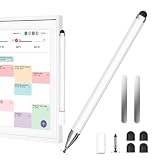
Shop digital planning stylus pens.
13. Create a Desktop Wallpaper Vision Board
A desktop vision board is useful if you spend much of your day working on a computer.
Design a horizontal collage with your main goals arranged around the edges.
Leave the center relatively clear if you use that area for desktop icons or open windows.
Include motivational images, short reminders, and important milestones.
Choose a calming color palette that doesn’t feel distracting.
✨ Vision Board Tip: Keep text large enough to read without opening the original design file.
Shop digital drawing tablets.

14. Design a Vision Board With a Before-and-After Layout
A before-and-after layout helps you visualize the changes you want to make.
Divide your board into two columns.
Label the left side “Where I Am Now” and the right side “Where I Want to Be.”
Use images and short descriptions to represent your current situation and desired progress.
Add a few practical steps between the columns.
This approach can work for organizing routines, learning skills, or improving your living space.
✨ Vision Board Tip: Keep the comparison encouraging and focus on progress rather than criticizing your current circumstances.
Shop vision board printable supplies.

15. Create a Vision Board With an Action Plan Section
An action-focused vision board combines inspiration with practical planning.
Divide your board into two main sections.
Use the top section for pictures representing your desired outcomes.
Reserve the bottom section for small action steps, deadlines, and progress notes.
For example, a travel goal might include a destination photo above a monthly savings plan.
✨ Vision Board Tip: Include at least one action you can take within the next seven days for each major goal.
Shop goal-setting planner notepads.

16. Make a Vision Board With a Habit Tracker Layout
A habit tracker vision board connects long-term goals with everyday routines.
Place your main goal images at the top of the board.
Below them, create a simple weekly or monthly habit tracker.
Use checkboxes, stickers, or small symbols to record your progress.
This works well for reading, exercise, journaling, hydration, and other consistent habits.
✨ Vision Board Tip: Track a small number of meaningful habits instead of trying to change everything at once.
Shop habit tracker stickers.

17. Create a Career and Personal Life Split Vision Board
A split layout is useful when you want to organize professional and personal priorities separately.
Divide your board vertically into two equal sections.
Use one side for career, education, or business goals.
Reserve the other side for relationships, wellness, hobbies, and personal interests.
Choose coordinating colors so the two sections feel connected.
✨ Vision Board Tip: Give both sides enough space to reflect what matters to you, rather than assuming work goals should dominate.
Shop large vision board cork boards.

18. Design a Vision Board With a Wheel of Life Layout
A wheel of life layout creates a balanced overview of different life areas.
Draw a large circle and divide it into sections like a pie chart.
Label each section with a category such as health, career, finances, relationships, learning, or recreation.
Add small pictures and words inside each segment.
You can also mark one specific goal for every category.
✨ Vision Board Tip: Use the wheel to identify areas you’d like to give more attention, not as a way to judge yourself against an ideal life.
Shop circle drawing templates.

19. Create a Travel Goals Vision Board Layout
A travel-focused layout is perfect for organizing dream destinations and trip plans.
Place a large map or travel-themed image in the center.
Arrange destination photos around it.
Add smaller sections for estimated budgets, savings milestones, and possible travel dates.
You can also include a checklist for travel planning tasks.
✨ Vision Board Tip: Separate dream destinations from trips you’re actively planning so your goals remain realistic and organized.
Shop travel vision board supplies.

20. Make a Financial Goals Vision Board Layout
A financial vision board can help you visualize savings and budgeting priorities.
Divide your board into sections for emergency savings, debt repayment, major purchases, and long-term goals.
Use simple illustrations or photographs to represent each objective.
Add specific amounts and target dates where appropriate.
Include a small progress tracker to update as you move toward each goal.
✨ Vision Board Tip: Focus on financial milestones you can influence rather than using unrealistic income promises or comparisons.
Shop savings goal tracker planners.
21. Create a Wellness Vision Board Layout
A wellness vision board helps organize goals related to physical and emotional well-being.
Divide the board into categories such as movement, sleep, relaxation, nutrition, and self-care.
Add calming pictures and encouraging statements to each section.
Include realistic habits that support your overall well-being.
Choose soft colors and natural imagery for a peaceful design.
✨ Vision Board Tip: Focus on sustainable habits and how you want to feel rather than appearance-based comparisons.
Shop wellness planner journals.

22. Design a Vision Board With Inspirational Quotes
A quote-focused vision board uses meaningful words as the main design elements.
Choose five to seven short quotes or affirmations that reflect your priorities.
Arrange the largest statement in the center.
Place smaller quotes around it with a few supporting images.
Use complementary fonts and colors to keep the design visually consistent.
✨ Vision Board Tip: Choose statements that feel personally meaningful and believable instead of filling the board with generic motivational phrases.
Shop inspirational quote stickers.

23. Create an Interactive Cork Board Vision Board
An interactive cork board allows you to rearrange goals as your priorities change.
Use a cork bulletin board as your foundation.
Attach photos, goal cards, and reminders with push pins.
Group related items into sections without permanently gluing them down.
As you complete goals, replace the cards with new priorities or move them into a completed section.
✨ Vision Board Tip: Keep push pins away from young children and place the board where it won’t be accidentally knocked over.
Shop cork board vision board kits.
24. Make a Vision Board With a Progress Tracker Section
A progress tracker layout helps you see how far you’ve come.
Divide your board into three sections: goals, action steps, and progress.
Place inspirational pictures in the first section.
Use the second for practical tasks and the third for milestones you’ve completed.
You can add progress bars, checkmarks, or small achievement cards.
✨ Vision Board Tip: Celebrate small milestones instead of waiting until an entire goal is completed.
Shop goal progress tracker stickers.

25. Create a Complete Vision Board With Goals, Habits, and Milestones
A complete vision board layout combines inspiration, organization, and action planning.
Divide your board into three main areas.
Use the top section for your biggest dreams and long-term goals.
Reserve the middle for current priorities and supporting habits.
Use the bottom for deadlines, progress trackers, and completed milestones.
Add images, short statements, and labels that make each section easy to understand.
This layout is ideal if you want your vision board to serve as both a motivational display and a practical planning tool.
✨ Vision Board Tip: Review the board regularly and update it when your priorities or circumstances change.
Shop complete vision board kits.

How to Organize Your Vision Board Step by Step
Creating an organized vision board starts with identifying what you want to accomplish.
Step 1: Write down your goals. List the personal, professional, financial, and lifestyle goals that matter most.
Step 2: Choose your priorities. Select a manageable number of goals to focus on.
Step 3: Pick a layout. Choose a grid, timeline, category-based design, or another arrangement that matches your planning style.
Step 4: Gather inspiration. Collect photos, quotes, colors, and words that represent your goals.
Step 5: Arrange before attaching. Test different placements before gluing or pinning anything permanently.
Step 6: Add specific milestones. Include measurable targets or realistic deadlines where useful.
Step 7: Include action steps. Connect each major goal to a small task you can begin.
Step 8: Display your board. Place it somewhere you’ll naturally see it.
Step 9: Review and update. Adjust your goals as your circumstances and priorities change.
Best Vision Board Layouts for Different Goals
| Vision Board Layout | Best For | Main Advantage |
|---|---|---|
| Classic grid | Multiple life goals | Clear organization |
| Central goal | One major priority | Strong visual focus |
| Life categories | Balanced personal planning | Separates goal areas |
| Minimalist | A few important goals | Reduces visual clutter |
| Quarterly layout | Annual planning | Breaks goals into periods |
| Monthly layout | Short-term milestones | Encourages regular reviews |
| Timeline | Long-term projects | Shows goal sequence |
| Priority pyramid | Prioritization | Highlights important objectives |
| Mind map | Creative planning | Connects related ideas |
| Photo collage | Visual inspiration | Flexible and expressive |
| Color-coded board | Multiple categories | Easy navigation |
| Habit tracker | Daily routines | Connects goals with actions |
| Progress tracker | Measurable goals | Makes achievements visible |
How to Choose the Right Vision Board Layout
The best layout depends on how you prefer to plan and visualize your goals.
Choose a grid layout if you like structure and clear categories.
Choose a collage layout if you enjoy creative freedom and visual inspiration.
Choose a timeline layout if your goals have important dates or milestones.
Choose a minimalist layout if too many images feel distracting.
Choose a habit tracker layout if your goals depend on consistent daily routines.
Choose a digital layout if you prefer keeping your goals on your phone or computer.
Choose an interactive cork board if you want to rearrange and update your goals frequently.
Budget-Friendly Supplies for Making a Vision Board
You can create an attractive vision board with inexpensive craft materials or items you already own.
| Supply | How to Use It |
|---|---|
| Poster board | Creates a large base |
| Cork bulletin board | Makes goals easy to rearrange |
| Magazine cutouts | Provides inspirational images |
| Printed photos | Represents specific goals |
| Colored markers | Adds headings and labels |
| Sticky notes | Holds changeable action steps |
| Washi tape | Creates borders and sections |
| Glue stick | Attaches paper elements |
| Stickers | Highlights goals and milestones |
| Index cards | Displays goal statements |
| Ruler | Creates neat grid layouts |
| Planner stickers | Adds progress trackers |
How Many Goals Should You Put on a Vision Board?
There isn’t one perfect number of goals for every vision board.
However, a smaller collection of meaningful goals is often easier to organize and review than a board filled with dozens of unrelated ideas.
For a minimalist board, consider starting with three to five goals.
For a category-based board, you might choose one or two goals for each important life area.
For a detailed annual board, you can include more goals as long as the layout remains clear.
The important thing is to create a board that helps you focus rather than making you feel overwhelmed.
Common Vision Board Layout Mistakes to Avoid
Adding too many goals: An overcrowded board can make it difficult to identify your priorities.
Choosing images without meaning: Attractive pictures are more useful when they represent something specific to you.
Ignoring action steps: Inspiration alone doesn’t replace planning and consistent effort.
Using unreadable text: Tiny labels and complicated fonts can make the board difficult to review.
Forgetting realistic timelines: Some goals require more time and flexibility than others.
Copying someone else’s priorities: Your board should reflect your own values and interests.
Never updating the board: Goals may change as you learn, grow, and experience new opportunities.
Focusing only on outcomes: Include habits, skills, and milestones that support your desired results.
How to Make Your Vision Board More Effective
A vision board can be a useful reminder of your goals, but it works best when paired with practical action.
Connect each goal to a next step. Identify something specific you can do to make progress.
Review your board regularly. A weekly or monthly check-in can help you stay aware of your priorities.
Track meaningful milestones. Record completed tasks and progress where appropriate.
Keep goals realistic and flexible. Adjust plans when circumstances change.
Place the board somewhere visible. Choose a location where you’ll naturally notice it without feeling pressured.
Celebrate progress. Recognize small achievements along the way.
Use your board as a planning tool. Let it guide your decisions rather than expecting visualization alone to produce results.
Final Thoughts
A well-organized vision board can help you turn a collection of dreams into a clearer picture of what you want to work toward. ✨
From minimalist grids and creative collages to timelines, habit trackers, and category-based designs, these 25 vision board layout ideas for organizing your goals offer plenty of ways to create a board that fits your personality and planning style.
Start with your most meaningful goals, choose a layout that makes sense to you, and include practical steps that support your progress.
Remember, your vision board doesn’t have to look perfect or stay the same forever.
The best vision board is one that inspires you, helps you stay organized, and encourages you to take meaningful action toward the life you want to create! 💫
Discover more from Serenity Talks
Subscribe to get the latest posts sent to your email.


