

This Post Contains Affiliate Links. Please Read Our Disclosure for Full Information.
Resistance bands are an affordable and convenient way to build strength at home, but small mistakes can make workouts less effective or increase the risk of injury. From choosing the wrong resistance to rushing through exercises, beginners often overlook important details.
These 15 resistance band workout mistakes beginners can avoid will help you exercise with better technique, confidence, and control.
1. Choosing a Resistance Band That Is Too Heavy
One of the most common resistance band workout mistakes is starting with a band that provides too much resistance.
Beginners sometimes assume that stronger bands automatically produce better results. However, excessive resistance can make it difficult to maintain proper technique.
For example, using a heavy band during bicep curls may cause you to swing your arms or lean backward.
Start with a lighter band that allows you to perform each movement smoothly.
Increase resistance gradually as your strength and control improve.
✨ Workout Tip: Choose a band that makes the final repetitions challenging without forcing you to compromise your form.
Shop light resistance bands for beginners.

2. Using a Resistance Band That Is Too Light
While heavy resistance can affect your technique, using a band that’s too light may not provide enough challenge for your strength goals.
If you can complete every repetition without noticeable effort, the exercise may not be providing an effective training stimulus.
However, lighter bands can still be useful for warm-ups, mobility exercises, and learning new movements.
The right resistance depends on the exercise, your fitness level, and your goals.
✨ Workout Tip: Use a variety of band strengths so you can adjust resistance for different muscle groups and exercises.
Shop resistance band sets with different levels.

3. Skipping the Warm-Up Before Resistance Band Exercises
Starting a resistance band workout without warming up can make the first few exercises feel unnecessarily difficult.
A short warm-up helps prepare your muscles and joints for movement.
Begin with five to ten minutes of gentle activity, such as marching in place, arm circles, or easy bodyweight movements.
You can also use a very light resistance band for controlled warm-up exercises.
✨ Workout Tip: Match your warm-up to the workout. For an upper-body session, include gentle shoulder and arm movements before starting harder exercises.
Shop light exercise resistance bands.

4. Performing Resistance Band Exercises Too Quickly
Rushing through repetitions is another common mistake beginners make.
Fast, uncontrolled movements can reduce your ability to maintain proper positioning.
For example, during a resistance band row, pulling quickly and allowing the band to snap back can make the exercise harder to control.
Instead, use smooth, deliberate movements.
Control both the pulling phase and the return phase of each repetition.
✨ Workout Tip: Try a steady rhythm, such as approximately two seconds for the lifting phase and two seconds for the return, adjusting as needed for the exercise.
Shop resistance bands with handles.

5. Using Incorrect Posture During Band Workouts
Poor posture can affect how effectively you perform resistance band exercises.
Beginners may round their shoulders, arch their lower backs excessively, or lean too far forward.
For example, during standing band rows, excessive leaning can shift the movement away from the intended muscles.
Maintain a comfortable, stable posture throughout each exercise.
Keep your movements controlled and avoid unnecessary twisting or bending.
✨ Workout Tip: Practice exercises slowly in front of a mirror or record a short video to check your alignment.
Shop full-length workout mirrors.

6. Stretching Resistance Bands Beyond Their Safe Limit
Resistance bands are designed to stretch, but every band has a safe operating range.
Pulling a band beyond the manufacturer’s recommended limit can increase the risk of damage or breakage.
This is particularly important when using thin latex bands or older equipment.
Always follow the instructions provided with your resistance bands.
Choose a longer band or a different resistance level if an exercise requires excessive stretching.
✨ Workout Tip: Never assume that all resistance bands can safely stretch the same distance. Check the manufacturer’s guidance for your specific product.
Shop durable exercise resistance bands.
7. Forgetting to Check Resistance Bands for Damage
Resistance bands can develop small tears, cracks, or worn areas over time.
Using a damaged band increases the risk of it breaking during an exercise.
Before every workout, inspect the band for visible signs of wear.
Pay particular attention to areas near handles, seams, and attachment points.
Replace bands that show damage rather than attempting to repair them.
✨ Workout Tip: Store resistance bands away from direct sunlight, excessive heat, and sharp objects to help maintain their condition.
Shop resistance band storage organizers.

8. Using an Unstable Resistance Band Anchor
An insecure anchor point is a serious safety concern during resistance band workouts.
Beginners may attach bands to lightweight furniture, loose door handles, or other unsuitable objects.
If the anchor moves or fails, the band can recoil unexpectedly.
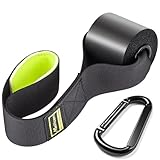
Use a purpose-made anchor system that is compatible with your band.
Follow the manufacturer’s instructions carefully and check that the anchor is secure before applying resistance.
✨ Workout Tip: Never anchor a resistance band to furniture or fixtures that could tip, break, or move under tension. Position yourself outside the band’s potential recoil path.
Shop resistance band door anchors.
9. Holding Your Breath During Resistance Band Exercises
Some beginners unintentionally hold their breath while performing challenging repetitions.
This can make the exercise feel more difficult and may cause unnecessary straining.
Try to maintain a comfortable breathing rhythm throughout the movement.
For many exercises, you can exhale during the more challenging phase and inhale during the return.
Avoid forcing your breath or holding it for extended periods.
✨ Workout Tip: If you notice yourself holding your breath, reduce the resistance and practice the movement with slow, steady breathing.
Shop beginner resistance band workout guides.

10. Ignoring Proper Range of Motion
Range of motion refers to how far your joints move during an exercise.
Beginners sometimes perform very short movements because the resistance is too strong.
Others may force their joints beyond a comfortable range in an attempt to stretch the band farther.
Neither approach is ideal.
Move through a controlled, comfortable range that suits your mobility and the exercise.
Avoid forcing painful positions.
✨ Workout Tip: Start with a lighter band if you cannot complete the intended movement comfortably while maintaining good technique.
Shop flexible resistance bands for exercise.
11. Doing Too Many Repetitions With Poor Form
More repetitions don’t always mean a better workout.
When beginners become tired, they may continue exercising even after their technique starts to deteriorate.
This can lead to swinging, excessive leaning, or uncontrolled movements.
Instead, choose a repetition range that allows you to maintain proper form.
For many beginner strength exercises, approximately 8–12 controlled repetitions can be a reasonable starting point, depending on the movement and individual ability.
✨ Workout Tip: End the set when you can no longer maintain good technique, even if you haven’t reached your planned repetition count.
Shop fitness workout tracking journals.

12. Training the Same Muscles Without Enough Recovery
Resistance band workouts can feel less demanding than traditional weight training, but your muscles still need recovery.
Beginners sometimes repeat challenging workouts for the same muscle groups every day.
This may contribute to excessive fatigue, persistent soreness, or reduced workout quality.
Plan your training schedule so the same muscles have adequate time to recover.
For many beginners, allowing roughly 48 hours between challenging strength sessions for the same muscle group is a useful starting point.
✨ Workout Tip: Alternate upper-body and lower-body workouts or include rest days based on how your body responds.
Shop weekly fitness planner notebooks.

13. Neglecting Lower-Body Resistance Band Exercises
Some beginners focus heavily on arm exercises while overlooking their legs and glutes.
A balanced resistance band routine should include movements for several major muscle groups.
Lower-body exercises may include banded squats, lateral steps, glute bridges, and standing hip movements.
Choose exercises that match your current fitness level and mobility.
A balanced approach supports overall strength and helps prevent an overly repetitive routine.
✨ Workout Tip: Include both upper-body and lower-body exercises across your weekly training schedule.
Shop fabric resistance bands for legs.

14. Failing to Increase Resistance Gradually
Repeating the exact same workout indefinitely may eventually limit strength progress.
As your muscles adapt, an exercise that once felt challenging may become easier.
Gradual progression helps keep resistance training effective.
You can increase the challenge by choosing a slightly stronger band, adding repetitions, or performing additional sets when appropriate.
Make only small changes at a time.
✨ Workout Tip: Track your exercises and resistance levels so you can recognize when you’re ready for a manageable increase.
Shop progressive resistance band sets.

15. Following Advanced Resistance Band Workouts Too Soon
Advanced resistance band workouts can look exciting, but they may not be suitable for someone just starting out.
Complex movements often require balance, coordination, and familiarity with band tension.
Attempting difficult exercises before mastering the basics can make it harder to maintain safe technique.
Begin with simple movements such as band rows, bicep curls, seated presses, and controlled lower-body exercises.
Build confidence with these movements before progressing to more challenging routines.
✨ Workout Tip: Prioritize mastering a few basic exercises rather than trying every new workout you see online.
Shop beginner resistance band exercise sets.

How to Start Resistance Band Workouts Safely as a Beginner
A simple routine can help you develop confidence and improve your technique.
Step 1: Choose suitable resistance bands. Start with light or medium resistance appropriate for your strength.
Step 2: Inspect your equipment. Check bands, handles, and anchors for damage before each session.
Step 3: Warm up. Spend five to ten minutes performing gentle movements.
Step 4: Select basic exercises. Choose movements that train your upper body, lower body, and core.
Step 5: Practice controlled repetitions. Focus on smooth movements rather than speed.
Step 6: Begin with manageable sets. One or two sets per exercise may be enough when you’re learning.
Step 7: Rest between sets. Allow enough recovery to maintain good technique.
Step 8: Finish with a gentle cooldown. Slow your movements and return to comfortable breathing.
Step 9: Track your progress. Record exercises, repetitions, and resistance levels.
Step 10: Increase difficulty gradually. Add challenge only when you can maintain proper form.
If you have an injury, medical condition, or uncertainty about whether resistance training is appropriate, consult a qualified healthcare professional before beginning.
Common Resistance Band Mistakes and How to Fix Them
| Common Mistake | Why It Matters | Better Approach |
|---|---|---|
| Band too heavy | Encourages poor technique | Start with lighter resistance |
| Band too light | May provide insufficient challenge | Increase resistance gradually |
| Skipping warm-up | Makes preparation less effective | Warm up for 5–10 minutes |
| Moving too quickly | Reduces movement control | Use smooth repetitions |
| Poor posture | Changes exercise mechanics | Maintain stable alignment |
| Overstretching bands | Increases equipment failure risk | Follow manufacturer limits |
| Using damaged bands | Raises snapping risk | Inspect and replace worn bands |
| Unstable anchor | Can cause sudden recoil | Use a secure, approved anchor |
| Holding breath | Encourages unnecessary straining | Breathe steadily |
| Poor range of motion | Limits movement quality | Use a comfortable range |
| Too many repetitions | May lead to fatigue-related errors | Stop when form deteriorates |
| Insufficient recovery | Can increase fatigue | Schedule recovery time |
| Unbalanced workouts | Neglects muscle groups | Train the whole body |
| No progression | May limit improvement | Increase challenge gradually |
| Advanced exercises too early | Makes technique harder to control | Master beginner movements first |
Beginner-Friendly Resistance Band Workout Routine
This simple full-body workout can help beginners practice basic resistance band movements.
| Exercise | Repetitions | Sets | Main Muscle Groups |
|---|---|---|---|
| Resistance band squats | 8–12 | 1–2 | Legs and glutes |
| Resistance band rows | 8–12 | 1–2 | Back and arms |
| Resistance band bicep curls | 8–12 | 1–2 | Biceps |
| Resistance band chest press | 8–12 | 1–2 | Chest and triceps |
| Resistance band lateral steps | 8–10 per direction | 1–2 | Hips and glutes |
| Resistance band glute bridges | 8–12 | 1–2 | Glutes |
| Resistance band tricep extensions | 8–12 | 1–2 | Triceps |
Choose variations that allow secure band positioning and controlled technique. For chest presses and other anchored exercises, use a properly installed, compatible anchor.
Rest approximately 45–90 seconds between sets, or longer if needed.
Beginners may start with two nonconsecutive strength-training days per week and adjust according to fitness level and recovery.
How to Choose the Right Resistance Band for Beginners
Different types of resistance bands are suited to different exercises.
| Resistance Band Type | Best For | Main Advantage |
|---|---|---|
| Flat therapy bands | Gentle strengthening and mobility | Easy to adjust tension |
| Mini loop bands | Glute and hip exercises | Compact and portable |
| Fabric loop bands | Lower-body exercises | Often stay in place comfortably |
| Tube bands with handles | Rows, curls, presses | Convenient grip |
| Long loop bands | Full-body strength training | Versatile exercise options |
| Resistance band sets | Progressive training | Multiple resistance levels |
Resistance colors aren’t standardized across brands. Always check the manufacturer’s resistance specifications instead of relying on color alone.
How Often Should Beginners Use Resistance Bands?
Many beginners can start with resistance band strength workouts two days per week.
As strength, technique, and recovery improve, some people may choose to train three days per week.
The ideal frequency depends on workout intensity, exercise selection, and individual fitness level.
For full-body workouts, scheduling sessions on nonconsecutive days can provide useful recovery time.
You can also include walking, gentle mobility work, or other enjoyable activities between strength sessions.
Consistency and appropriate progression matter more than exercising every day.
Budget-Friendly Resistance Band Workout Essentials
You don’t need an expensive home gym to start resistance band training.
| Workout Essential | Purpose |
|---|---|
| Light resistance band | Beginner strength exercises |
| Medium resistance band | Gradual progression |
| Mini loop bands | Hip and glute exercises |
| Tube bands with handles | Upper-body training |
| Compatible door anchor | Secure anchored movements |
| Exercise mat | Comfortable floor exercises |
| Workout journal | Tracks sets and progress |
| Water bottle | Convenient hydration |
| Storage pouch | Protects and organizes bands |
| Supportive athletic shoes | Helps with stable standing exercises |
Resistance Band Safety Tips for Beginners
Resistance bands are convenient, but proper equipment handling is important.
Inspect bands before use. Look for cracks, tears, fraying, and damaged attachment points.
Avoid overstretching. Stay within the manufacturer’s recommended limits.
Use secure anchors. Never attach bands to unstable furniture or loose fixtures.
Keep bands away from your face. Be aware of possible recoil if a band slips or breaks.
Maintain a firm grip. Keep handles and bands secure throughout each movement.
Avoid sharp surfaces. Rough edges can damage elastic materials.
Stop if you experience pain. Sharp, sudden, or unusual pain is a reason to stop and reassess the exercise.
Store bands properly. Keep them away from excessive heat, direct sunlight, and objects that could damage them.
Follow product instructions. Different resistance band systems may have different safety requirements.
How to Know When to Increase Resistance
You may be ready to increase resistance when your current exercises feel noticeably easier.
Some useful signs include:
- You can complete all planned repetitions with consistent technique.
- You can control the band during both the pulling and returning phases.
- The final repetitions no longer feel moderately challenging.
- You can maintain stable posture without unnecessary compensation.
- You recover comfortably between workouts.
When these conditions are met, try a slightly stronger band or another small progression.
Avoid increasing resistance if your form becomes unstable or the movement causes discomfort.
Final Thoughts
Resistance bands can be a practical and effective addition to a beginner’s home workout routine when used with proper technique and sensible progression. 💪
From selecting the right resistance to checking equipment and allowing enough recovery, these 15 resistance band workout mistakes beginners can avoid highlight the habits that support safer, more effective exercise.
Start with simple movements, focus on control, and gradually increase the challenge as your strength improves.
You don’t need complicated routines or the strongest bands to make meaningful progress.
With consistency, patience, and good technique, resistance band workouts can become a convenient part of your long-term fitness routine! ✨
Discover more from Serenity Talks
Subscribe to get the latest posts sent to your email.


